

Why Traditional Bucket Bashing Fails Club Golfers
Many club golfers arrive at the practice ground with good intentions, take a dozen balls, and hit the same chip repeatedly from a clean lie towards the same flag. The contact may feel increasingly solid, yet that comfort can be misleading. Weekend medal play rarely offers a level lie, a perfect stance, or the same landing area twice. A ball may finish against the fringe, sit down in rough, or leave an awkward short-sided pitch where the safest option is not the most obvious one.
This is where repetitive bucket bashing falls short. Block practice, in which one shot is rehearsed again and again under identical conditions, can create immediate fluency without developing reliable adaptation. The golfer remembers the movement and the result, but not necessarily the decision-making required when the lie, target, pressure and consequence all change. Skill retention is tested after a break and skill transfer is tested in a different setting, which is precisely why a practice routine should contain variation rather than simply more balls.
A 45-minute station framework provides a practical answer for lunch hours, late afternoon visits and quick evening sessions. Instead of measuring success by the number of balls struck, the session is divided into purposeful tasks covering pace control, varied lies and competitive up-and-downs. Every shot has a target, a consequence and a piece of information to record. The result is a compact routine that resembles the demands of the course far more closely than an uninterrupted sequence of identical chips.
The Anatomy of an Efficient 45-Minute Station Setup
Begin by making the practice area easy to read. Use tees to mark a central starting point, several landing zones and a boundary around each station. Alignment rods can identify a safe target line, a gate for putting or the intended entry route for a chip. The aim is not to create an elaborate training installation. It is to give each shot a clear purpose and to prevent the familiar drift from deliberate practice into casual hitting.
A sensible allocation is 12 minutes for putting, 18 minutes for varied chipping and 15 minutes for the pressure game. Carry a small selection of wedges, an 8-iron, several balls, tees, a pitch-mark repair tool, an alignment rod and a pocket notebook. A towel is useful for keeping grips dry and for creating a visual reference, while a spare glove can make a short session more comfortable in changeable Yorkshire weather. When assessing facilities, Cleckheaton Golf Club Reviews and visitor information can help golfers identify venues offering a practice green, outdoor nets or other areas capable of supporting varied work. Always follow local practice-ground guidance, protect the turf and leave the station tidy for the next member or visitor.
| Station | Time | Primary objective | Evidence of progress |
|---|---|---|---|
| Putting gate | 12 minutes | Start line and pace | Successful starts and finishing distance |
| Randomised lies | 18 minutes | Club and flight selection | Landing-zone results |
| Pressure gauntlet | 15 minutes | Decision-making under consequence | Up-and-down percentage |
Station One The Putting Gate and Speed Control Protocol
Start with a three-tee gate placed just wider than the putter head, positioned a short distance in front of the ball. The gate should be demanding enough to expose a pushed or pulled start, but not so narrow that a slight miss makes the exercise unhelpful. Strike five putts through the gate from a manageable distance, then alter the starting point. The purpose is to calibrate a square face at impact and to make the first few feet of the putt meaningful, rather than judging the stroke only by whether the ball eventually reaches the hole.
Once the strike is behaving, move to a ladder drill. Choose four or five stopping zones at increasing distances and attempt to finish one ball in each zone without leaving a putt short of the previous target. The drill is particularly valuable for lag putting, where poor pace turns a difficult first putt into a card-wrecking three-putt. On subtle breaks, visualise the speed at which the ball should enter the hole, not merely the highest point of the break. The architectural tradition associated with Alister MacKenzie helped establish the importance of strategic green contours, and modern green complexes continue to reward a precise start line combined with suitable pace.
- Place the three-tee gate on the intended start line and make five controlled strokes.
- Move through the ladder distances, selecting a pace that leaves a realistic second putt.
- Repeat one station with a modest break, calling the entry speed before addressing the ball.
- Record how many balls start through the gate and how many finish within a safe second-putt range.
Station Two Randomised Lies and Flight Adaptation Around the Green
Clean practice lies are useful for checking technique, but they should not dominate a short-game session. Toss balls into bare turf, the fringe and thicker rough, then approach each one without moving it to a more convenient position. A random lie forces a decision before the swing begins. Consider how much grass may interfere with the strike, whether the club can pass through the surface and how much landing area is available if contact is less than perfect.
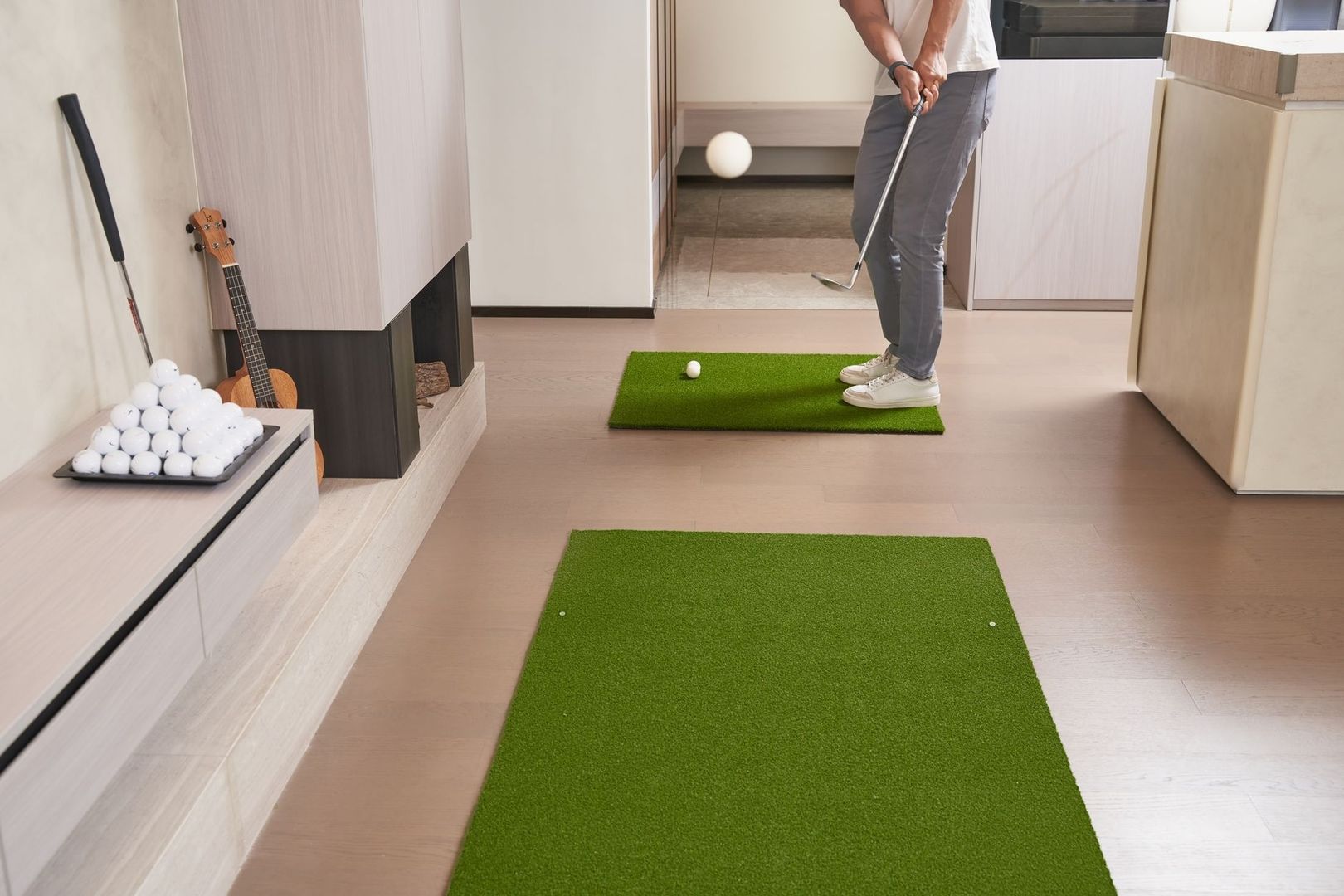
Club selection should follow the required flight rather than habit. An 8-iron can produce a low bump-and-run with predictable release when there is plenty of green available. A 58-degree wedge may be appropriate when the ball must carry a bank, stop quickly or land softly, but it demands more precise contact and usually leaves less margin for error. Between those options sit several useful shots, including a lower wedge pitch or a putter from the fringe. Building a dependable short-game system means understanding which option gives the widest acceptable margin on the day.
- From the fringe, compare a putter with a low-running 8-iron and judge the landing zone, not just the hole.
- From bare turf, narrow the stance, centre the ball appropriately and make a controlled strike without trying to lift it.
- From thick rough, assess how much the grass will reduce speed and choose a loft and landing point that allow for release.
- From a tight lie near a short-sided flag, consider whether a safer landing area can protect the next shot.
Place tees around each chosen landing zone and award a point only when the ball finishes inside the intended area. The flagstick remains relevant, but it should not become the sole target. A shot landing in the correct portion of the green and finishing outside tap-in range may still be an excellent decision, particularly when the alternative involves a high-risk lob. This distinction is central to scoring improvement: evaluate the quality of the choice and the landing result before judging the final distance from the hole.
Station Three The Up-and-Down Pressure Gauntlet
The final station turns technique into a small competition. Create nine different short-game scenarios around the practice green, using a mixture of fringe, fairway-height turf, bare lies and rough. Imagine that each ball represents a hole where par is two shots from the chosen starting point. One ball is used for each attempt, and the objective is to chip or pitch inside a realistic makeable range, then hole the putt. There is no second ball to rescue a poor decision and no immediate repetition to soften the consequence.
A pocket notebook makes the exercise more useful than a vague impression that the session felt good. Record the lie, club, intended landing zone, result of the first shot and whether the putt was holed. Over several sessions, the percentage becomes a more honest benchmark than the number of successful practice swings. A player who converts four of nine attempts from difficult lies has a clear starting point. The next objective might be five of nine, followed by improved performance from the lies that repeatedly cause trouble.
- Choose nine different starting lies and write a short description before hitting.
- Commit to one club and one landing zone after assessing the lie, without rehearsing multiple alternatives with extra balls.
- Play the shot and complete the putt, counting the hole as saved only when the two-shot target is achieved.
- Review the record, identify recurring misses and select one issue for the next practice session.
Take Your New Short-Game Confidence to the First Tee
Deliberate practice consistently outperforms hours of unfocused ball hitting because it trains the decisions that actually determine a score. A 45-minute session does not need to feel rushed. Each station simply gives the available time a job, and each result provides information that can guide the next visit. The routine also suits the varied demands of club golf, where changing ground conditions, unfamiliar pin positions and competitive consequences matter just as much as clean contact.
Before a round, reduce the framework to a brief warm-up. Spend a few minutes rolling putts to a distance, hit a small number of chips to a broad landing area and finish with a couple of committed pressure putts. Avoid turning the warm-up into a technical overhaul. Over the next three monthly medals, record scoring average, three-putts and up-and-down conversion percentage. Those figures will show whether station discipline is transferring to the course, giving the next practice session a clear purpose and helping confidence rest on evidence rather than hope.